
Blackjack ace sequencing and the real story behind the shuffle
The term blackjack ace sequencing gets tossed around in whispers, usually by people who have watched one too many films about card counters in tuxedos. In practice, it is a narrow idea: the notion that the order of aces in a shoe can be tracked, predicted, or somehow sequenced to tilt a hand in your favour. The reality is less glamorous and considerably more mathematical. Most reputable operators shuffle early, use continuous shuffling machines, or cut deep enough that any sequencing attempt collapses before the first bet lands. Still, the phrase persists, which is why it deserves a clear-eyed look rather than another round of Hollywood nonsense.
What the phrase actually describes
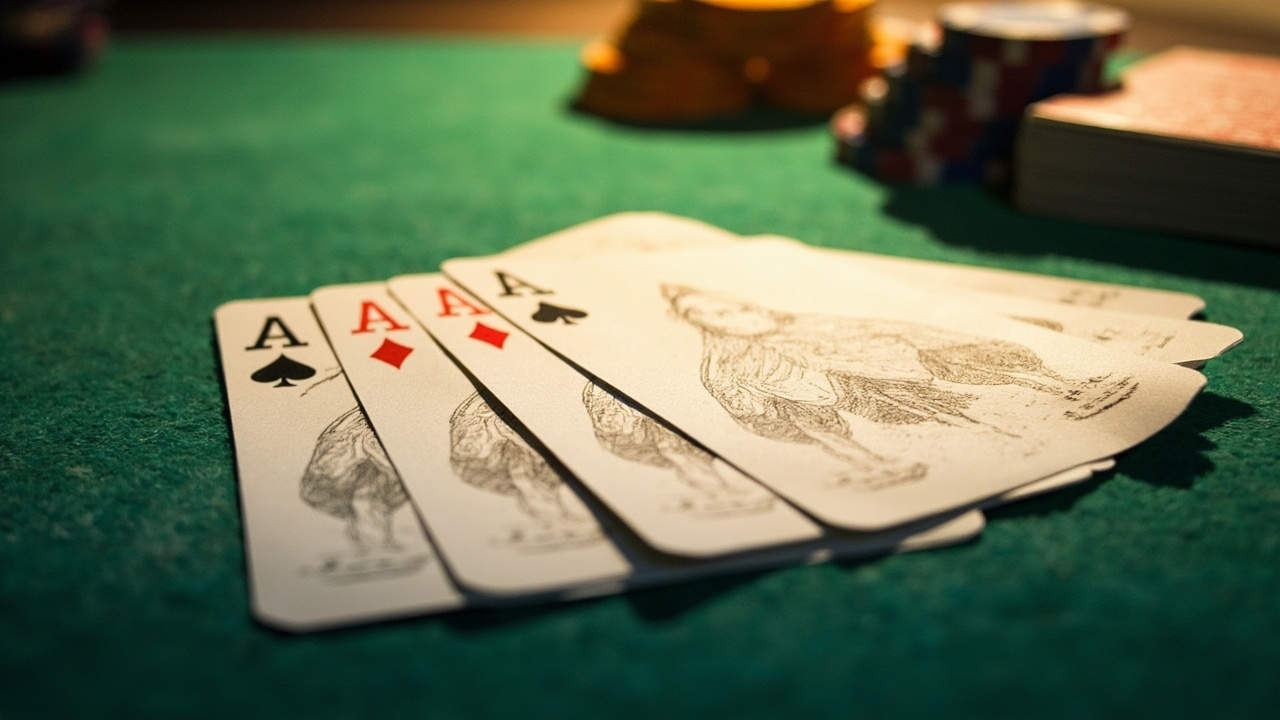
Ace sequencing is not a system for guaranteeing wins; it is a theoretical observation about card order. In a single-deck game dealt slowly, a player who can identify where aces sit in the remaining stack might adjust bet size or playing decisions on the next round. That sounds tidy until you remember that modern blackjack tables rarely sit still long enough for the idea to matter. Multi-deck shoes, deep cuts, and automatic shufflers turn the concept into a classroom exercise rather than a practical edge. Even when a deck is hand-shuffled, the moment an ace appears early, the distribution shifts and the sequence you were tracking is already outdated. The maths does not care about your memory.
There is a useful comparison here. The Banker bet in baccarat carries the lowest house edge in that game, around 1.06%, which is a clean, published number you can actually bank on. Ace sequencing has no equivalent certainty. It is a pattern-recognition exercise that depends on conditions most operators deliberately remove. If a table uses a continuous shuffler, the idea evaporates entirely because the cards are returned to the machine after every hand. If the cut card comes out early, the shoe ends before any sequence becomes meaningful. None of this makes the concept wrong; it just makes it narrow, and narrow ideas need narrow conditions to survive.
A relaxed way to think about it is this: if you are sitting in a busy arvo at a Melbourne club and the dealer is running a six-deck shoe with a machine shuffling between hands, you are not sequencing anything. You are watching a well-oiled routine. The cards move, the bets land, and the house edge does what it always does. That does not mean the idea is useless for study; it means it belongs in the study, not on the felt.
Where the idea survives and where it does not
The only places ace sequencing has any breathing room are the ones most players never get to. Single-deck games with shallow penetration, hand-shuffled shoes, and slow pacing are the theoretical home for the concept. Those conditions are increasingly rare because they are also the conditions that give any observant player a better look at the deck. Operators who still run them tend to watch the table closely, because the same discipline that lets someone notice an ace pattern also lets them notice a bet that jumps when it should not. The point is not that everyone at the table is plotting anything; the point is that the environment itself is less forgiving than it looks. book of dead casino
It helps to remember that games of chance have a long history of being treated like a shortcut to funding. The US Continental Congress ran a lottery to help finance the Revolutionary War, which is a neat reminder that people have always hoped a randomised draw might solve a very unrandom problem. Ace sequencing sits in the same family of hopeful ideas: it sounds like a lever you can pull, but it still depends on luck, timing, and a shoe that behaves the way you want it to. The difference is that a lottery ticket is an honest admission of chance, while sequencing language often dresses chance up as technique.
For anyone weighing whether the idea matters at a real table, the practical question is simpler than the theory. Does the game use a shuffler? How many decks are in play? Where does the cut card sit? If the answers close the door, the conversation is over. If the answers leave a sliver of room, the room is still small enough that bet sizing and discipline matter far more than any remembered order of aces.
| Condition | What it means for ace sequencing |
|---|---|
| Single deck, hand-shuffled, deep penetration | The only realistic setting; still narrow and short-lived |
| Multi-deck shoe with early cut card | Sequence breaks before it becomes useful |
| Continuous shuffling machine | Concept effectively removed from play |
| Slow pace, attentive dealer | More observation possible, but also more scrutiny |
How operators handle it and what that means for players
Reputable operators do not need to dramatise their response to ace sequencing because the mechanics do most of the work. Shallow penetration, frequent shuffles, and machine-assisted mixing are standard precisely because they keep the shoe unpredictable. That is not a conspiracy; it is a control measure, the same kind of thinking that keeps a baccarat table honest about its published edges. The Banker bet’s 1.06% house edge is a number players can see and weigh; the alternative is a game where the deck order is deliberately hard to read, which is the norm rather than the exception.
Players sometimes ask whether a site or venue leans into this or that, and the honest answer is that the details matter more than the branding. A mobile-friendly table that loads quickly and keeps the betting controls close at hand is useful, but it does not change the underlying shoe. Responsive design is a convenience, not a signal about penetration or shuffle style. If you are judging a blackjack offering, look at the game rules, the number of decks, and whether the shuffle is automatic. Those are the things that decide whether any sequencing talk is even relevant.
There is a quieter lesson in all of this. If you are reading up on blackjack ace sequencing because you want a clearer sense of where the idea belongs, treat it like a technical footnote rather than a plan. It can sharpen your understanding of deck dynamics, which is never a bad thing, but it should not be mistaken for a route around the house edge. The edge is there because the game is built that way, and no remembered order of aces rewrites the maths.
The useful takeaway is plain enough. Ace sequencing is a real observation in a narrow set of conditions, and those conditions are the ones most tables actively avoid. That is not a verdict on anyone’s skill; it is just how the machinery of the game is set up. If you enjoy the study of card order, fine, but keep your expectations tied to the shoe in front of you, not the one in a movie.
Author : cinemamadeofficial@gmail.com
